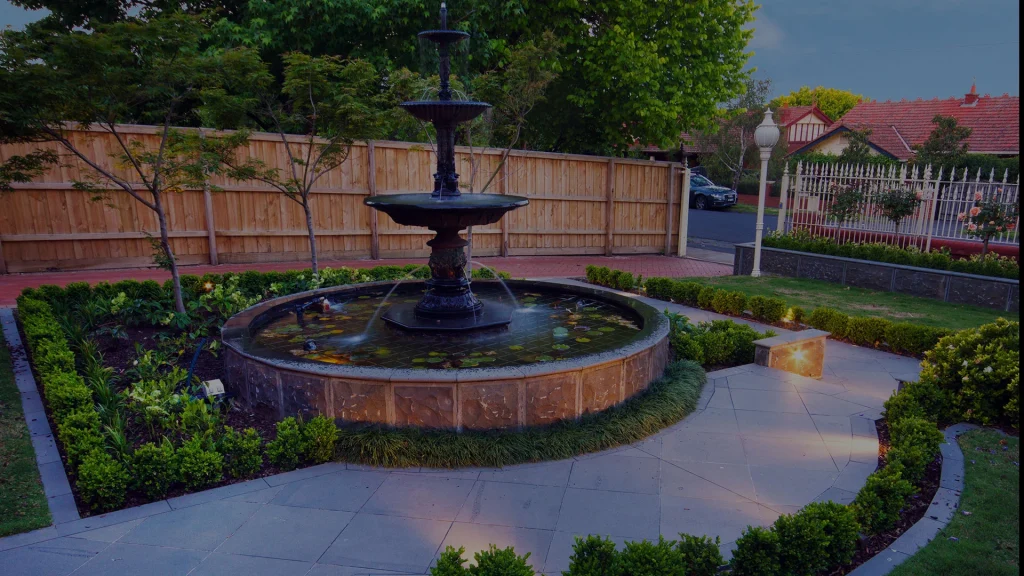
Tuckerman Landscaping & Design integrates garden water features in Melbourne with planting, paving, lighting and practical landscape construction planning.
Adding a water feature without considering the surrounding garden can create drainage, access and maintenance problems over time, including unnecessary changes to completed paving or planting. Well-designed garden water features in Melbourne should relate to the site’s levels, planting, paving, views and intended use. Treating the feature as part of the landscape from the beginning produces a more coherent and practical project.
What Should a Garden Water Feature Contribute?
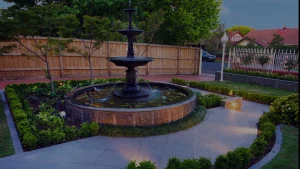
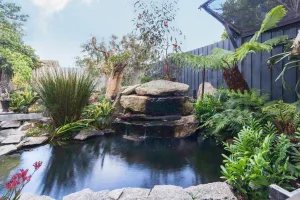
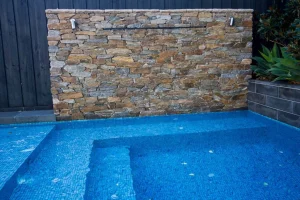
A garden water feature should serve a defined purpose within the outdoor area. It may create a focal point, introduce gentle sound, complement an entertaining space or support a naturalistic planting scheme that suits the property and its established architectural character.
Its position should respond to where people will see and experience it, including windows, paths, decks and seating areas. Viewing distance, circulation space and surrounding architecture should then guide its scale, shape and material character. Our article about water fountains and native plants provides further context for integrating planting with a feature.
Which Site and Installation Details Matter?
The site determines which design can operate safely and remain manageable. Before construction, we assess levels, exposure, nearby vegetation, access and services instead of selecting a feature based only on appearance.
- Levels and overflow: Establish where rain, splash and overflow will travel without directing water towards buildings or creating persistently wet paving.
- Sun and wind: Direct sun can increase evaporation, while wind may carry spray outside the basin and onto paths, furniture or planting.
- Trees and roots: Falling leaves add debris, while roots may conflict with excavation, pipework or a reservoir.
- Water circulation: Victoria’s permanent water-saving rules require fountains and other water features to recirculate water.
- Power and safety: Pump and lighting requirements should be identified before finished work restricts cable routes. Regulated electrical installation work must be completed by appropriately licensed electrical workers, while shallow ponds still require careful access and child-safety decisions.
- Construction access: Allow room to bring in materials, remove spoil and complete excavation without damaging retained surfaces or established plants.
- Maintenance expectations: Identify practical access to pumps, filters, water levels and cleaning points before the surrounding finishes are installed.
How Should the Feature Connect with the Garden?
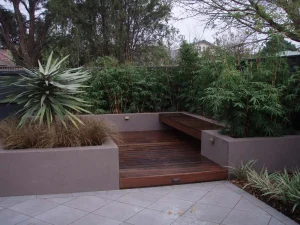
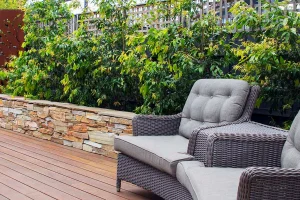
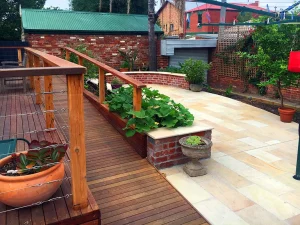
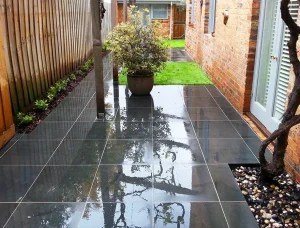
The feature should share visual and functional relationships with nearby planting, stonework, walling, paving or lighting. Repeated materials aligned edges and framed views can make it feel intentional without allowing it to dominate the garden. This coordination is central to our Melbourne landscaping services, which cover both hard and soft landscaping.
Maintenance access should remain practical, with pumps, filters and cleaning points easy to reach. Plants should not block servicing, and the scope should cover debris removal, water checks and routine component access.
Tuckerman Landscaping & Design for Garden Water Features in Melbourne
An integrated design resolves the feature’s purpose, position and supporting requirements before construction begins. At Tuckerman Landscaping & Design, we can incorporate water features with planting concepts, lighting, paving, stonework and walling to suit the agreed outdoor design. This approach gives homeowners a clearer project scope during construction and reduces avoidable conflicts between separate landscape elements.
Contact us with site photographs, approximate dimensions and your preferred water-feature style to arrange an initial project discussion.